Why Gift Card Data Is More Valuable Than the Gift Card Itself
Gift cards are usually measured in very simple terms. How many were sold, how much value was loaded and how much was eventually redeemed. These numbers are important, but they only show one part of the picture. Behind every gift card is a series of customer interactions that can provide businesses with valuable information about how people discover, visit and engage with a shopping destination.
A gift card can tell you when a purchase happened, where it happened and what value was loaded onto the card. Once the card is redeemed, you can also understand when and where it was used and, depending on the systems connected to the gift card programme, potentially connect that activity with an existing customer or loyalty profile. Suddenly, something that initially looked like a simple €50 transaction becomes part of a much broader customer story.
The difference between data and insight
Having this information is one thing. Knowing what to do with it is another. A list of gift card transactions doesn’t automatically tell you anything useful about your customers. The value comes from being able to connect different pieces of information and identify patterns.
For example, imagine that a shopping centre notices that a large share of its gift cards are purchased by existing customers but redeemed by people who have never interacted with the centre before. That could be an important indication that the gift card programme is contributing to customer acquisition. The next question then becomes what happens to those new visitors after they redeem their cards.
Do they return? Do they join the loyalty programme? Do they visit other stores? Do they spend more than the original value of the gift card? These are the questions that can turn gift card data into something much more valuable than a sales report.
Location can tell an interesting story
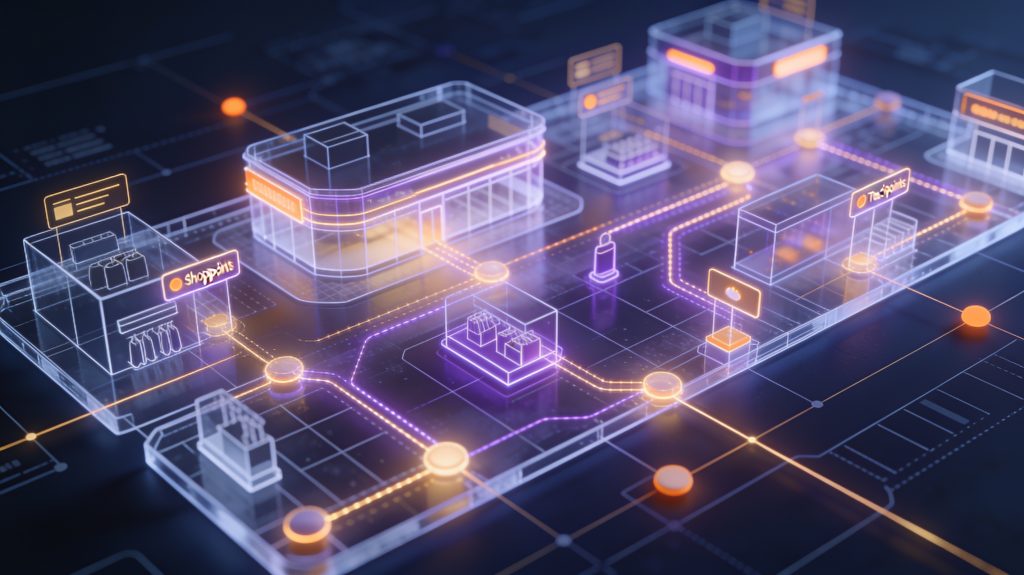
For shopping centres and businesses with multiple locations, the location of a gift card transaction can also provide useful context. Where are customers buying gift cards? Where are they redeeming them? Are they using them at the same location or travelling to another one? Are certain stores or locations more popular among gift card users?
Looking at these patterns can help businesses understand how customers move through their network. It can also reveal opportunities that would be difficult to see if gift card activity was viewed only as a financial transaction.
A card purchased in one location and redeemed in another is not simply a €50 transaction. It represents movement between two customer touchpoints, and that information can become particularly useful when combined with other customer and loyalty data.
The real value comes from connecting systems
The biggest challenge for many businesses is not a lack of data. It is the fact that their data is often spread across different systems. Gift card transactions might live in one platform, loyalty information in another and marketing activity somewhere else.
When these systems operate independently, each one only provides a partial view of the customer. Connecting them can create a much clearer picture.
A gift card redemption, for example, can become part of a customer’s loyalty profile. That profile can then be used to understand future behaviour and create more relevant customer segments. Marketing automation can use those segments to trigger communication based on actual customer activity rather than assumptions.
The technology itself isn’t the most important part. What matters is what the connected data allows the business to understand and do.
From reporting to decision-making
This also changes the questions businesses ask about their gift card programme. Instead of looking only at sales and redemption rates, they can start asking broader questions about customer behaviour.
How many gift card recipients were new customers? How many returned after their first redemption? How many became loyalty members? Which campaigns generated the most engaged customers? Are there differences between customers who redeem their cards in one transaction and those who use them across several visits?
Not every business will have the data to answer all of these questions immediately, and not every pattern will lead to a clear conclusion. But asking better questions is the first step towards getting more value from the information that already exists.
Making the gift card work harder
A gift card will always have a financial value attached to it. But its value to a business doesn’t necessarily stop there.
The purchase creates an interaction. The redemption creates another. Loyalty can provide additional context, while future visits and engagement show what happens next. When these interactions are connected, businesses can start to understand the customer journey rather than simply counting transactions.
This is where the idea of going beyond the gift card becomes important. The card itself may only be worth €50, €100 or another fixed amount. The information and customer relationship created around it can have a much longer lifespan.
The most valuable part of a gift card may not be the value stored on it, but the customer data created around it.
What Happens After a Gift Card Is Redeemed?
For many businesses, the gift card journey looks simple. Someone buys it. Someone receives it. The card is redeemed. The balance is reduced.
Done? From a customer experience and marketing perspective, redemption can actually be the beginning of a new customer relationship.
Redemption is an important customer touchpoint
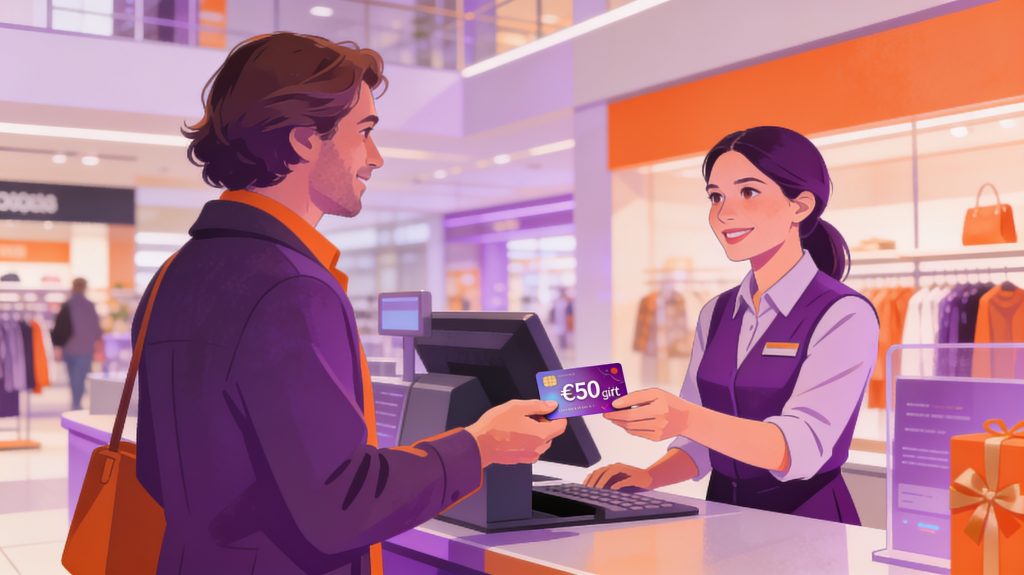
Imagine a customer who receives a €50 gift card for a shopping centre they have never visited before. They choose a store, redeem the card and perhaps spend even more than its original value.
But what happens next? Do they return? Discover other stores? Join the loyalty programme?
In a shopping centre, the journey often does not end with a single transaction. A customer may use part of the balance with one tenant and return later to spend the rest elsewhere. One gift card can therefore create multiple visits and interactions with different tenants.
A gift card can bring in a new customer
The buyer and recipient of a gift card are often two different people. The buyer already knows your destination. The recipient may not. That means a gift card is not only a source of revenue. It can also become a customer acquisition tool.
For a shopping centre, it can generate additional footfall, introduce customers to stores they might not otherwise visit and encourage additional spending.
From gift card to loyalty
Gift cards become even more interesting when connected with a loyalty programme.
Imagine a €100 gift card. On the first visit, the customer spends €65. On the next visit, they use the remaining €35 with another tenant and add another €20 of their own money. The €100 gift card has now contributed to two visits, two tenant interactions and €120 in total spending.
It did not simply create a transaction. It created a reason to return. If the customer is also part of the loyalty ecosystem, those interactions can become part of their profile and enable more relevant communication.
Data reveals the bigger picture
A gift card system can show:
when and where the card was purchased,
whether it was physical or digital,
whether it was purchased online, at an information desk or through a self-service kiosk,
where and when it was redeemed,
whether the balance was spent in one transaction or across several visits,
which tenants were involved,
whether the customer spent more than the value of the card,
whether they returned or joined a loyalty programme.
An individual tenant usually sees only what happens inside their own store. A shopping centre can gain a broader view of how customers move between different tenants, categories and visits.
Automation turns data into action
Data alone does not improve the customer experience. What matters is what you do with it. A gift card redemption can trigger relevant follow-up communication. A new loyalty member can receive a welcome message. A customer who has not returned for some time can enter a re-engagement campaign.
The principle is simple:
The customer does something. The system recognises it. The business responds with something relevant.
That is very different from simply sending more emails.
Three important moments
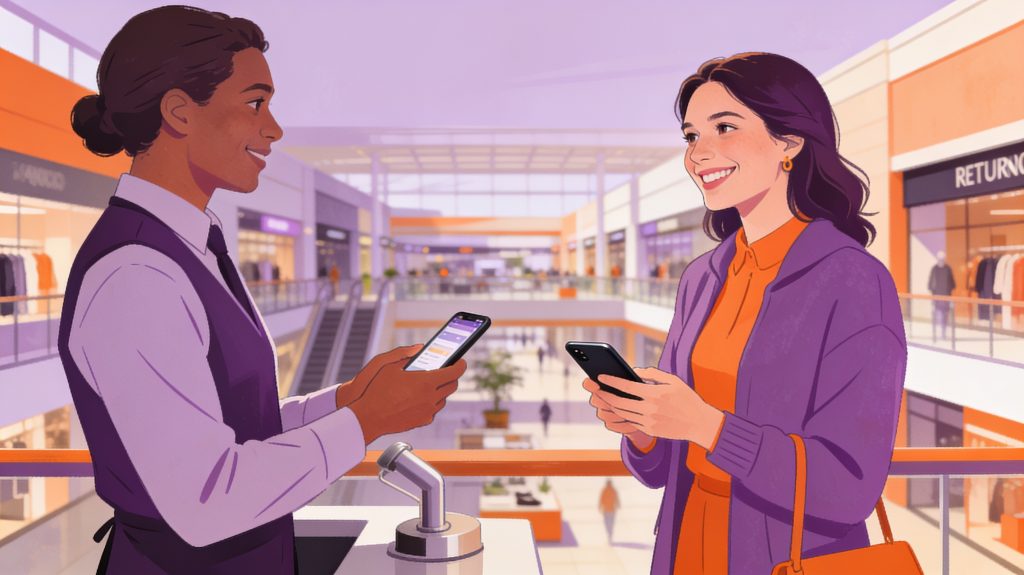
After purchase The experience should be simple for both buyer and recipient. For digital gift cards, that can include instant delivery and easy access through a mobile wallet, whether the purchase starts online, at an information desk or through a kiosk.
After redemption This can be the right moment to introduce loyalty or other relevant benefits. If part of the balance remains, the gift card itself already creates a reason for another visit.
After inactivity If the customer does not return, appropriate data and consent can make this an opportunity for re-engagement.
The key is for communication to follow actual customer behaviour.
Beyond the gift card
Gift cards are often measured through simple metrics:
How many did we sell? What was their total value? How many were redeemed?
At SmartGifty, we see the gift card as part of a broader digital customer journey.
By connecting gift cards, loyalty, customer data and marketing automation, shopping destinations can better understand what happens before, during and after redemption — and create relevant reasons for customers to return. That is why the most important question is not only:
“How many gift cards did we sell?”
But also:
“How many new customer relationships did those gift cards create?”
Because the real value of a gift card does not necessarily end when its balance reaches zero.
Financial Engineering in Retail: How Gift Cards Stabilize Cash Flow Ahead of the Q4 Rush
All retailers know the dynamics of the final quarter of the year. November and December bring the peak of sales, which often saves the entire business year. However, this model carries a major risk: companies must invest huge resources in inventory and advertising months before they ever see the first euro of sales revenue. This creates serious pressure on company liquidity in the middle of autumn.
The solution to this challenge is not a bigger advertising budget in October, but understanding a concept called predictive revenue through the presale of value.
Lesson 1: The Gift Card as an Interest Free Loan from the Customer to the Company
The financial logic of gift cards is fascinating yet often overlooked. When a customer buys a gift card in September, the company receives the funds immediately. The product or service, however, will be redeemed months later, sometimes even in the following year.
From an accounting and finance perspective, this means improving cash flow exactly when the company needs liquid assets most to prepare for the season. The customer effectively grants the company an interest free loan because they trust the brand and know they will redeem the value later. Sales planning thus becomes much more stable.
Lesson 2: The Psychology of Unused Value (Breakage)
Another key financial aspect of gift card systems is what is known as breakage – the percentage of value on cards that customers never fully redeem or that expires. Although the company’s goal always remains for the customer to redeem the card and enjoy a premium experience, global statistics show that a portion of the amounts remains unused. For the company, this represents direct revenue with an extremely high margin, which further strengthens the financial stability of the business.
Lesson 3: Generating Additional Traffic Upon Redemption
When companies think about strategies to increase sales, they often focus on attracting entirely new customers, which is expensive. Gift cards, however, bring in customers who are already motivated to buy.
When a cardholder enters your store (physical or online) in September or October, they almost never spend the exact amount on the card. In over 70 percent of cases, the purchase value exceeds the card value. The customer perceives this as a discount – if they have a 50 euro card and the product costs 70 euros, they feel they got a premium product for just 20 euros of their own money. This is the easiest path to a higher average shopping cart value.
Lesson 4: Automation and Independence from Logistic Bottlenecks
At a time when supply chains begin to strain before the end of the year and delivery times lengthen, digital gift cards offer complete independence. Since a system like SmartGifty allows immediate digital delivery to an email address or mobile wallet, the company incurs no costs for inventory, packaging, or postal services. Sales can flow seamlessly 24 hours a day, seven days a week, without any logistical barriers.
Stabilizing cash flow does not start in December. It begins in September with the smart deployment of an infrastructure that enables the presale of value and ensures that the company enters the golden rush of Q4 financially strong and stable.
B2B Guide: How to Optimize Employee and Business Partner Rewards with Gift Cards
September brings a sense of a new beginning to the business world. Companies are returning from vacations, new projects are kicking off, and critically, management teams begin planning budgets for the final quarter of the year. Instead of waiting until December, when everyone is frantically searching for last minute gifts, forward thinking organizations are setting their B2B gifting strategy right now.
Since this is a specific area where legislation and team motivation intersect, we have prepared a transparent guide with answers to key questions about modern rewarding.
Why are traditional corporate gifts losing their meaning?
For many years, corporate gifts for employees and partners were predictable: mugs, calendars, planners, or generic food gift baskets. Today, this approach no longer works. Modern employees and business partners value utility and freedom of choice. A generic gift often ends up in a drawer or is completely forgotten, which means wasted money for the company and zero impact on team loyalty.
What is a Closed-Loop system and why is it ideal for B2B rewards?
A Closed-Loop gift card system means that the card can only be redeemed within a specific network of stores, a company, or a destination. For the B2B segment, this is highly attractive because the company giving the gift knows exactly where that value will stay. If you are the manager of a shopping center, a city, or a specific network of providers, you can offer your gift card to local companies as the perfect local corporate gift that supports the local economy.
What is the situation regarding tax incentives for employee gifting?
This is one of the most common questions. Companies are always looking for ways to reward employees in the most tax efficient manner. Tax incentives for gifts are closely linked to the form of the reward. Legislation often allows certain tax free amounts for gifts to employees’ children at the end of the year or for specific anniversaries. Using digital gift cards allows companies to keep transparent records, and it simplifies the work for accounting because every euro is traceable and compliant with regulations.
How does a gift card improve employee motivation?
The key to successful motivation is personalization. When an employee receives a gift card powered by the SmartGifty platform, they do not just receive an amount; they receive the opportunity to choose their own gift when they truly need it. Choosing the gift becomes an experience. An employee will remember a trip, a dinner, or a tech gadget they bought themselves using your card far longer than another classic plastic pen with a company logo.
When is the right time to implement a B2B sales channel for gift cards?
If you want other companies to buy your gift cards for their employees, you need to set up the infrastructure in September. That is when companies adopt their financial plans. By establishing a simple B2B portal for ordering gift cards, you enable companies to order larger quantities of cards with a few clicks, receive a single combined invoice, and simplify their pre holiday logistics challenges. Your B2B marketing strategy must be ready before they are.
B2B Guide: How to Optimize Employee and Business Partner Rewards with Gift Cards
September brings a sense of a fresh start to the business world. Companies return from holidays, new projects get underway and, most importantly, management teams start planning their budgets for the final quarter of the year. Rather than waiting until December, when everyone is frantically looking for last-minute gifts, forward-thinking organizations are already putting their B2B gifting strategy in place.
Because this is a specific area where legislation and employee motivation intersect, we have prepared a transparent guide covering the key questions around modern employee and partner rewards.
Why are traditional corporate gifts losing their appeal?
For years, corporate gifts for employees and business partners were predictable: mugs, calendars, notebooks or generic food hampers. Today, this approach is becoming less effective. Modern employees and business partners value usefulness and freedom of choice. A generic gift often ends up sitting in a drawer or being forgotten altogether, which means wasted money for the company and little to no impact on employee or partner loyalty.
What is a Closed-Loop system and why is it ideal for B2B rewards?
A Closed-Loop gift card system means that a card can only be redeemed within a specific network of stores, a company or a destination. This is particularly attractive for the B2B segment because the company giving the gift knows exactly where the value will be spent.
If you manage a shopping centre, city or a specific network of businesses, you can offer your gift card to local companies as the perfect local corporate gift, while also supporting the local economy.
What about tax benefits for employee gifts?
This is one of the most common questions. Companies are always looking for ways to reward employees in the most tax-efficient way possible. Tax treatment and potential exemptions depend heavily on the form and purpose of the reward. Legislation may allow certain tax-exempt amounts for gifts to employees’ children at the end of the year or for specific anniversaries and milestones.
Digital gift cards also make record-keeping more transparent and simplify the work for accounting teams, as every transaction can be tracked and documented in accordance with applicable regulations.
How can a gift card improve employee motivation?
Personalization is key to successful employee rewards. When an employee receives a gift card powered by the SmartGifty platform, they are not simply receiving a fixed amount of money. They are given the freedom to choose their own reward and use it when it actually suits them.
The act of choosing the gift becomes part of the experience. An employee is likely to remember the trip, dinner or piece of technology they bought with your gift card far longer than yet another generic plastic pen with the company logo on it.
When is the right time to implement a B2B gift card sales channel?
If you want other companies to purchase your gift cards for their employees, the infrastructure needs to be ready in September. This is when many companies are planning and approving their financial plans for the final quarter and the end of the year.
By launching a simple B2B portal for ordering gift cards, you can allow companies to order larger quantities in just a few clicks, receive a single consolidated invoice and simplify the logistical challenges that come with the holiday season.
Your B2B marketing strategy needs to be ready before they are.
Q4 Technical Guide: How to Prepare Your Gift Card Infrastructure for the Holiday Surge
Successful execution of sales campaigns in the final quarter is not merely a matter of a compelling marketing message, but primarily a question of reliable technological infrastructure. When online and foot traffic surges exponentially during Black Friday and the December holiday season, your sales systems must be prepared to process high transaction volumes without unexpected downtime. Gift cards represent a particularly critical segment—frequently accounting for more than a quarter of total revenue during the last three months of the year—demanding flawless technical and operational support.
The primary focus of September preparations should be the complete optimization of the hybrid or phygital customer journey. Modern consumers no longer differentiate between an e-commerce platform and a brick-and-mortar store; they demand a completely seamless transition. Digital gift cards must be delivered to the buyer’s email inbox or mobile wallet within seconds of payment confirmation, as holiday purchases are often made at the very last minute. Equally vital is fast, friction-free in-store redemption at the POS terminal, where the system must support direct scanning of digital codes from smartphone screens without manual entry. To eliminate discrepancies, card balances must synchronize in real time across all channels, making any remaining funds immediately available for in-store checkout right after an online purchase.
Operating a proprietary gift card platform provides a major strategic advantage in data-driven marketing automation. Setting up advanced automation workflows during this phase—such as automated balance reminders—courteously prompts recipients about unspent funds while highlighting curated product recommendations. Upon redemption, the platform can automatically trigger targeted cross-sell sequences featuring related items, naturally elevating average order value. Furthermore, granular segmentation based on customer purchasing history enables you to extend exclusive early-access holiday promotions to your most loyal buyers.
Beyond user experience and marketing workflows, infrastructure capacity and security protocols demand equal attention. Increased Q4 traffic elevates the risk of server overloads and potential fraud. Before the high season launches, stress-testing server stability and API throughput under heavy load is essential. Robust security protocols must be established to prevent fraudulent code generation, alongside thorough training for retail floor staff to ensure confident handling of customer inquiries. Implementing solid technical preparations in September mitigates December operational stress and provides customers with an effortless experience that drives repeat purchases.
Strategic Dossier: The Hidden Treasure of the August Lull and the Power of Zero-Party Data
August in the retail and e-commerce world is often seen as a month when the rhythm slows down. While most companies view this period merely as a summer lull before the autumn rush, forward thinking brands recognize a hidden opportunity. A time when sales pressures are lower is ideal for revamping the most important asset of modern business: customer data.
The rules of the game regarding privacy are changing irreversibly. Traditional tracking using third party cookies (Third-Party Data) is permanently becoming a thing of the past. Companies that rely only on guessing social media algorithms are losing touch with the market. The solution defining modern digital marketing in retail is Zero-Party Data.
What is Zero-Party Data and Why Does It Change Everything?
Unlike data collected about customers covertly or indirectly, Zero-Party Data is information that consumers share with you consciously, intentionally, and voluntarily. This includes their direct desires, intentions, personal birthdays, style preferences, or plans for future purchases.
The Golden Rule of Modern Marketing: A customer will trust you with their data only when they receive immediate, tangible value in return. The summer lull is the perfect moment to establish mechanisms that collect this data without aggressive sales tactics. Gift cards and advanced loyalty programs act here not as a payment method, but as the most powerful tool for acquiring consented information.
How the Mechanism Works: How a Gift Card Unlocks a Customer Profile
When a company uses a closed loop ecosystem, such as SmartGifty, it gains direct insight into the entire purchase lifecycle. Every card issued or redeemed is the start of a data trail that the customer creates voluntarily.
Let’s look at three key points where consumer buying behavior transforms into pure data:
The Moment of Gifting (Intent): When a shopper personalizes a gift card for a friend on the website, they voluntarily hand over data about two key demographics simultaneously – themselves and the recipient. The choice of the card design (e.g., birthday, wedding, corporate gift) immediately reveals the context of the purchase.
Registration and Balance Checking: Holders of digital gift cards frequently check the balance on their card or register it in their mobile wallet. This is the moment an anonymous store visitor becomes an identified customer with a name, surname, and e-mail address.
Redemption (Preferences): Data on when, where, and for what the card was redeemed tells the company everything about the customer’s actual desires. If a card was purchased in May but redeemed in August for a specific premium product line, the company has an accurate profile ready for autumn segmentation.
Data Source Comparison: Where Lies the Highest Value?
To understand why collecting customer data through your own channels is crucial for e-commerce trends, let’s look at the difference between the models companies use today:
Third-Party Data: This involves tracking via cookies on external websites. The accuracy level is low, as it relies on guessing based on algorithms. The level of customer trust is very low, as it often triggers a feeling of privacy invasion.
First-Party Data: This includes website analytics and clicks in e-newsletters. The accuracy is medium, as it tells you when someone does something, but not necessarily why. The trust level is medium, based on automatic acceptance of terms.
Zero-Party Data (SmartGifty model): This is direct entry upon purchase or redemption of a gift card. The accuracy level is extremely high, as the customer themselves states their desires and context. The trust level is very high because it is a voluntary exchange of data for tangible value.
Preparing for Autumn: Smarter Personalized Offers
Data collected during the August lull is the key to success in the final quarter of the year. Instead of sending generic emails to everyone on the list, companies can launch hyper-personalized campaigns in September.
If you know who redeemed a gift card in the summer and what their remaining balance was, you can offer them exactly what they need to complete their purchase. Privacy in marketing poses a challenge, but by using transparent phygital tools, this challenge becomes your greatest competitive advantage. Don’t wait for November – the data architecture for a successful autumn is built now.
Digital Fatigue and the Return to the Tangible: Why the Modern Shopper Needs More Than a Screen
The modern market is facing a paradox. Consumers spend more time online than ever before, yet indicators point to a clear saturation. A phenomenon that experts call digital fatigue is shifting the way people shop, research, and connect with brands. After years of rapid migration of all services to the cloud, one thing is becoming crystal clear: the future of successful retail is not exclusively digital; it is tangible.
For brands, this presents a serious strategic challenge. How do you capture the attention of a shopper who ignores banner ads, deletes emails, and uses the rejection of digital noise as a form of self defense? The answer lies in a concept that combines the best of both worlds – the phygital approach.
The Anatomy of Digital Saturation
Digital marketing in retail has reached a point where putting in more effort no longer automatically yields better results. Consumers are bombarded with split second impressions, discount apps, and endless price comparison options. The consequence of this is a loss of emotional connection with the brand. When shopping becomes merely a sequence of clicks on the smooth glass of a smartphone, that crucial element that drives long term loyalty is lost: the experience.
Research into consumer buying behavior shows that people are seeking physical contact once again. They want to walk into a space, feel the ambiance, try out a product, and experience a service in the real world. However, this does not mean a return to the past. A shopper who steps into a brick and mortar store has not forgotten the convenience of the digital world. They expect the speed, personalization, and technological support they know from the web.
Phygital Trends: A Bridge Between Two Worlds
A successful in store customer experience today relies on blurring the lines between online presence and the physical location. Phygital trends do not just mean putting tablets on retail shelves; they mean the seamless integration of data and customer journeys. Brands need to create an ecosystem where digital channels serve as an invitation and a facilitator, while the physical space serves as the stage for a premium experience.
This is where modern gift card systems come into play, having long outgrown their original role as a last minute emergency gift. An advanced gift card is, in fact, the perfect phygital instrument.
It represents a tangible, physical key that a customer receives or purchases online and redeems in the real world – or vice versa. When a customer receives a beautifully designed card, they hold the promise of a future experience in their hands. This creates a psychological effect of anticipation, which has become a true rarity in a digital world full of instant confirmations.
How Gift Cards Transform Consumer Buying Behavior
When a company implements an advanced system like SmartGifty, it does not just offer a new payment method; it actively influences consumer buying behavior in three key ways:
Driving Traffic from Online to Physical Spaces: A digitally purchased gift card is the strongest motivator for visiting a physical location. When a customer visits a store or a destination with the intention of redeeming their card, their purchase intent is significantly higher.
Increased Purchase Value (Upselling): Statistical data shows that the majority of gift card users spend more than the original value on the card upon redemption. Because they perceive part of the amount as a gift or free money, they are much more inclined to purchase premium products or additional services.
Reducing Digital Friction: The purchasing process must be simple. Modern solutions ensure that the transition from an online order to physical redemption is completely smooth, without complex verifications or time consuming procedures at the checkout.
Strategy for the Future: Experience First
Protecting against digital fatigue is not about withdrawing from digital channels, but using them more smartly. Companies must use online platforms to build awareness and simplify transactions, while physical touchpoints must become experience centers.
In this context, a gift card acts as a medium that transfers the value and reputation of a brand directly into the hands of the customer. The next time you think about optimizing your sales channels, ask yourself: is your digital strategy leading customers away from you, or is it giving them a tangible reason to cross the threshold of your store?
The Phygital Retail Transformation: Bridging the Summer E-Commerce and In-Store Experience
The modern retail landscape is undergoing the most extensive transformation in its history. The era when e commerce platforms and brick and mortar stores operated as two separate islands within the same company is officially over. Today’s consumers no longer shop linearly. They expect a seamless, tech enabled experience that combines the speed and convenience of the digital world with the immediacy and emotional connection of an in person visit. This blending of two realities is what we call the phygital transformation. The August transition from a relaxed summer pace to intense autumn preparations offers the perfect moment to take a closer look at how this concept works in practice and why it has become essential for market survival.
The Challenge of Disconnected Sales Channels and Data Loss
The biggest drawback of the traditional retail model has always been a significant information gap. A customer could spend days or weeks researching products on a retailer’s website, adding items to their cart, and defining clear purchase preferences. However, the moment that same person stepped through the doors of a physical store, their entire digital footprint vanished. To the floor associate or cashier, that customer was a complete stranger. The result was a generic shopping experience that failed to leverage the customer’s previously demonstrated intent, often leading to lost sales opportunities.
The phygital transformation solves this challenge by integrating advanced tech systems that enable a smooth flow of data across all customer touchpoints. When a retailer successfully connects a customer’s digital profile with in store activities, entirely new personalization opportunities open up. Based on past browsing data, the system can send a targeted mobile app notification as the customer enters the store, alerting them to the availability of a desired item or offering an exclusive perk tailored to their specific interests. In this way, digital insights directly enhance the physical experience, boost customer satisfaction, and noticeably increase the average order value.
Smart Gift Cards as a Key Phygital Connector
At the core of every successful phygital strategy sit tools that are simple for the customer to use while offering high technical value to the retailer. One of the most effective bridges between both worlds is a modern smart gift card system. The days when a gift card was merely a static piece of plastic or a simple printed code in an inbox are long gone. Today, gift cards are advanced digital platforms fully integrated with mobile wallets, loyalty apps, and point of sale terminals.
Consider a typical August scenario: parents and students face packed schedules and lack the time for lengthy shopping trips for back to school supplies or clothing. Relatives or friends want to jump in with a practical gift. Using a smartphone, they can purchase an e gift card on the retailer’s website in seconds, personalize it with a video or image, and send it straight to the recipient. With a single tap, the recipient saves it to their Apple or Google Wallet.
If the recipient already holds a user profile, the store’s POS system instantly recognizes the card upon their in person visit and links it to their loyalty profile automatically. The entire journey from purchase to redemption happens effortlessly, without shipping delays or unnecessary printing. This is a textbook example of a phygital experience that saves the customer time while providing the retailer with immediate revenue realization.
Strategic Advantages of Closed Loop Systems and Data Management
Beyond delivering an exceptional user experience, the phygital transformation yields major strategic and financial gains for retailers, particularly within a closed loop environment. In such a setup, gift cards and vouchers are issued and redeemed exclusively within the merchant’s own network. This grants the business total, independent control over the financial stream, issuance, and transaction processing. Retailers successfully avoid the heavy transaction fees typically imposed by external payment providers or global card networks, directly boosting profitability on every sale. This independence aligns with broader market trends, much like why the EU is developing the digital euro and why the UAE introduced the Jaywan payment card.
Even greater value lies in the ability to securely collect, structure, and analyze purchasing behavior data. A closed loop phygital system gives retailers exact visibility into the entire lifecycle of invested funds. You can track precisely when and through which channel a card was purchased, the time elapsed before redemption, which store locations serve as top redemption hubs, and which product categories attract the most phygital shoppers. These metrics provide invaluable direction for marketing leaders and retail strategists, enabling highly personalized, well timed campaigns grounded in real transaction data rather than guesswork.
The Future of the Retail Ecosystem
Seamlessly connecting the digital and physical worlds is no longer just an advanced trend for early adopters or tech giants. It has become a baseline requirement for long term competitiveness and stability in retail. Modern shoppers will increasingly favor brands that leverage unobtrusive technology to simplify everyday purchases and offer maximum flexibility. By investing in phygital transformation, deploying smart mobile solutions, and fully harnessing closed loop gift card systems, retailers can ensure their stores remain engaging, efficient, and profitable through every season and market shift.
Christmas in July: Why strategic preparation beats seasonal hype
The “Christmas in July” trend is often seen as a quirky marketing gimmick, but for the serious retailer, it is a vital period of operational stress testing. July is the quiet before the storm of the fourth quarter. It is the final opportunity to ensure that your gift card management systems, loyalty databases, and point of sale integrations are robust enough to handle the massive volume of the winter holidays.
The technical dress rehearsal
In July, you should be running “Load Tests” on your gifting infrastructure. If your system can handle the peak traffic of a simulated Black Friday in July, you can sleep soundly in November. This includes checking the speed of your API calls, the stability of your cloud hosting, and the efficiency of your automated email and SMS delivery systems.
This is also the time to finalize your “Corporate Gifting” strategy for the end of the year. Many large organizations begin planning their holiday rewards in July and August. By having your corporate portal and bulk purchase options ready now, you can secure early contracts and lock in revenue months before your competitors have even thought about tinsel. This proactive approach ensures a steady cash flow and reduces the logistical pressure of the December rush.
Building a “pre-holiday” loyalty base
Use July to launch a “Early Bird” loyalty campaign. Offer customers a way to earn “Holiday Credits” that can be redeemed in December. This encourages shoppers to stay engaged with your brand throughout the summer and ensures that you are their first choice when the holiday shopping season begins.
For example, you could offer double loyalty points on all gift card purchases made in July, with the points becoming active in November. This not only drives immediate summer sales but also builds a “Bank of Loyalty” that will be spent during the most competitive time of the year. By treating July as the strategic foundation for the rest of the year, you move away from reactive retailing and toward a model of consistent, predictable growth.
Batching creative assets and content
While the technical team is stress testing the backend, the marketing team should use July to batch create all the content for the fourth quarter. It is much easier to design beautiful gift card templates and write compelling email sequences in the calm of July than in the chaos of November. By preparing your “Gifting Guides” and promotional banners now, you ensure a higher level of creative quality. A professional gifting system allows you to schedule these assets in advance, meaning your holiday campaigns can run like clockwork while your team focuses on customer service.
Managing the physical buffer zone
If you still offer physical gift cards alongside your digital ones, July is the deadline for ordering stock. Supply chains can be unpredictable as the year ends, so ensuring you have your card carriers, envelopes, and physical cards in the warehouse now is essential. Use this month to audit your physical inventory and reconcile it with your digital ledger. Having a “buffer zone” of physical supplies ensures that you are never caught off guard by a sudden surge in demand. Preparation is the silent partner of success in the retail world.